
Designation Decree : SK Walikota Surakarta No. 432.2/310 Tahun 2019
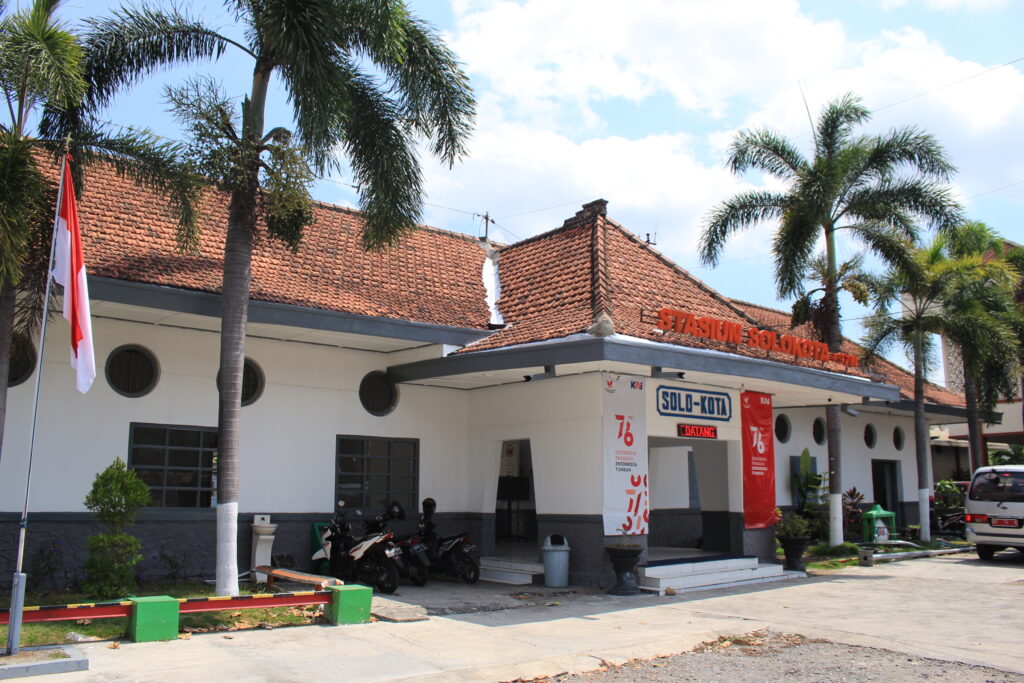
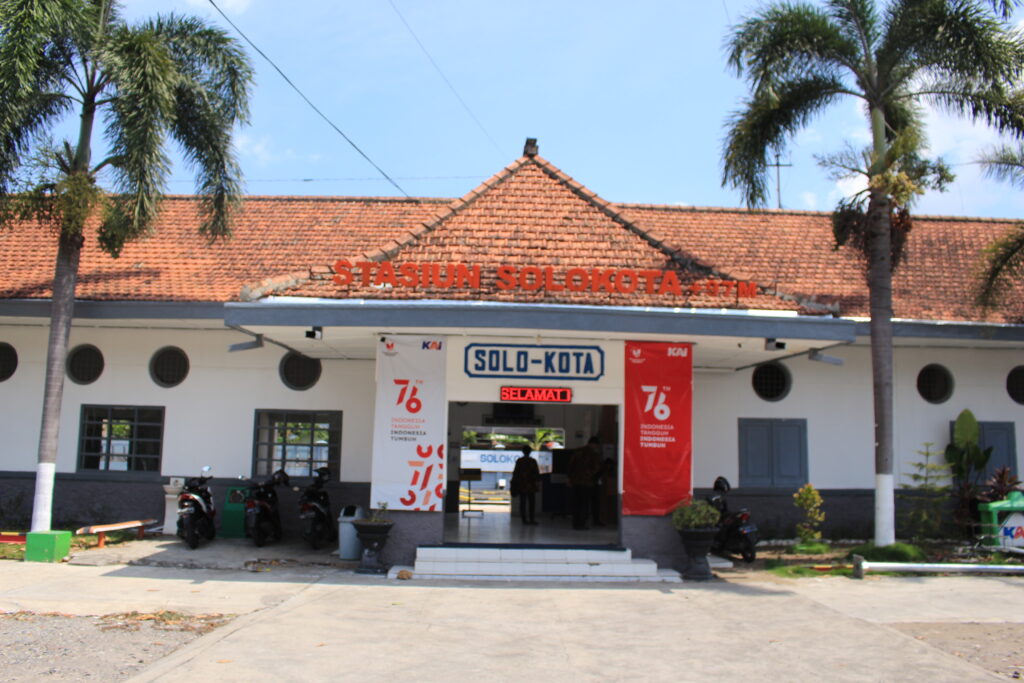
Solo City Railway Station, built in 1922, is located on the east side of Indonesia Christian Chruch (Gereja Kristen Indonesia), in Sangkrah. Situated in Jalan Sambas RT 03 RW 01, Kelurahan Sangkrah, Kecamatan Pasar Kliwon, this railway station is popularly known by locals as Sangkrah Railway Station.
In terms of construction, it was the last railway station built in Solo. The first was Balapan Railway Station, established in 1873 by a private railway company, Nederland Indische Spoorweg Maatschappij (NISM), headquartered in Semarang. This was followed by Purwosari Railway Station in 1875, also built by NISM, and then Jebres Railway Station, built by Staatspoor (SS) in 1884.
Sangkrah Railway Station is not only the newest but also the smallest railway station in Solo. It serves as the link between Solo and Wonogiri and acts as the southern gateway for trains entering the city.
The Solo-Wonogiri railway line originally operated as a tramway. Colonial-era sources note that in 1922, transportation between Solo and Wonogiri improved with the addition of a 33-kilometer tram line. Under the concession agreement, the route was planned to run from Solo to Kakap. However, due to cost concerns, NISM requested that the Dutch East Indies government limit the route to Baturetno instead. This proposal was approved (Memorie van Overgave Harloff, 1922). The tram line was built as a part of the government’s broader efforts to develop land transportation connecting Solo with areas beyond the city.
Alongside trams and trains, roads were also being paved to make it easier for people to travel out of the city. At that time, various public transportation options were available. In addition to rental cars and carts, buses were available for several routes, including the Solo-Boyolali-Klaten, Solo-Klaten-Yogyakarta, Solo-Wonogiri-Pacitan, and Solo-Karanganyar-Karangpandan. Moreover, two tramway lines were operating on the Solo-Wonogiri-Baturetno route (Memorie van Overgave Nieuwenhuys, 1927).
The management of the tramway in Solo by NISM has raised some questions. Originally, the tram network in Solo, covering routes such as Purwosari-Pasar Pon-Javaesche Bank, Pasar Gedhe to Jebres, Solo-Kartasura, Bangak, and Pasar Sunggingan in Boyolali, was managed by Solosche Tramweg Maatschappij (STM), a private tram company in Solo headquartered in 's-Gravenhage (Den Haag). However, on January 1, 1911, the management was taken over by NISM. Since then, tram transportation in Solo has been handled and developed by NISM (Waskito Widi Wardojo, Spoor Masa Kolonial: Dinamika Sosial Ekonomi Masyarakat Vorstenlanden 1864-1930. Solo: bukutujju, 2013, hlm 82).
Initially, the train passing through Sangkrah Railway Station served mainly as a feeder train, connecting Baturetno, Wonogiri, and Sukoharjo to Solo, about 80 kilometers away. However, after the construction of the Gajah Mungkur Reservoir, part of the railway line was submerged and had to be cut off. Since then, only a 33-kilometer section has remained in operation, linking Solo to Wonogiri (kekunoan. blogspot.com, 25 Agustus 2014).
The feeder train connecting Wonogiri and Solo operated until the 1990s. However, by 2000, the Solo-Wonogiri route was discontinued. This was due to the high operational costs and growing competition from other modes of transportation. As a result, Sangkrah Railway Station became neglected.
In 2010, the Solo government proposed reviving the Purwosari-City Station line via Slamet Riyadi Street by introducing facilities such as the Sepur Kluthuk Jaladara (Jalarada tourist train) and Bathara Kresna feeder train or Bathara Kresna railbus (indonesiaheritagegallery. blogspot.com, 8 November 2015). Supporting this idea, Sangkrah Railway Station underwent renovations in 2012 to make it suitable for resuming train operations between Solo and Wonogiri (solopos.com, 26 September 2012). However, this project faced delays due to the high operational cost. Despite these challenges, Bathara Kresna Railbus finally resumed operations in March 2015.
From a historical perspective, Sangkrah Railway Station is a building of great historical value due to its important role in urban transportation, particularly in connecting Solo with its southern regions, Sukoharjo and Wonogiri.
Tumbuhkan marketing Anda dan bisnis online Anda